Saturday, August 07, 2010
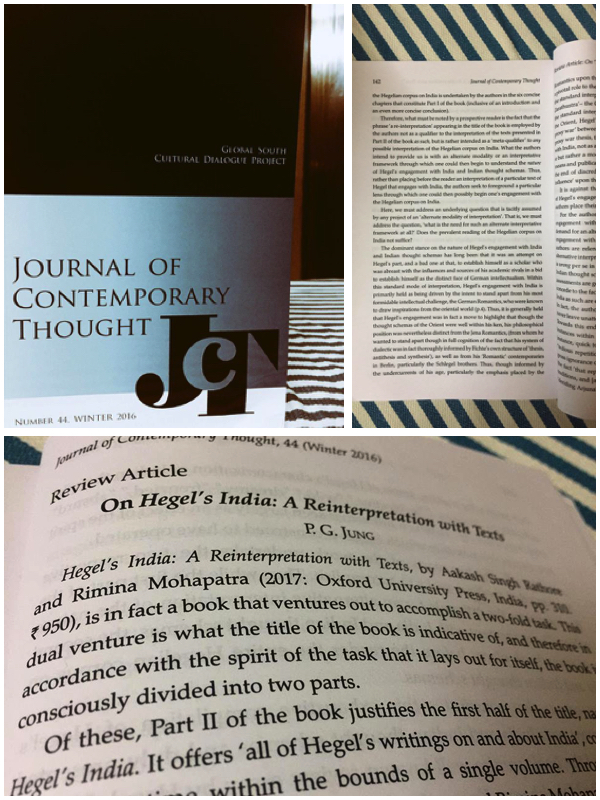
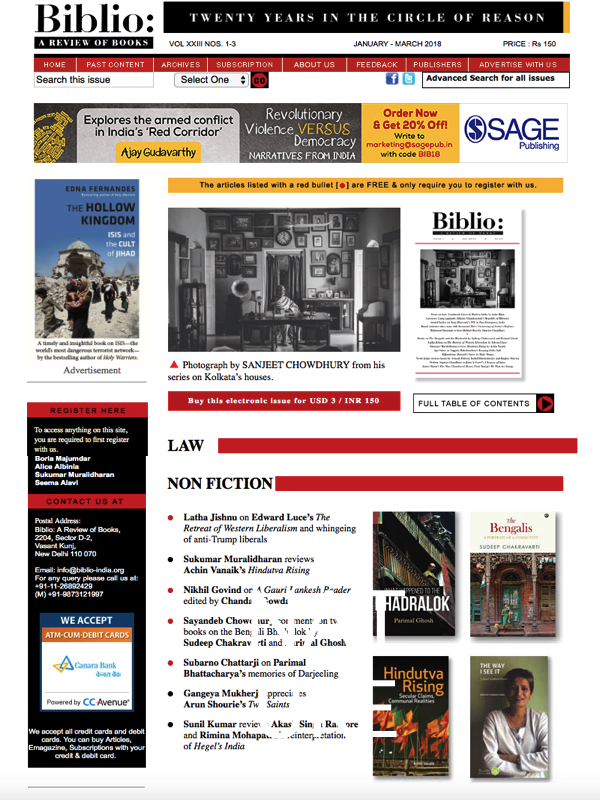
Reading Hegel: The Introductions
Tuesday, December 22, 2009
Duped
Cease to end
Time stopped by
Lazing
On a dreamful frolic
Duped by a blemish
Shining lies
A tiny speck
Flung ashore
Under the watchful guard
Of an idle moon
You wait still
For the tempestuous one
In a stormy quiet
Disarming eyes
Edging ahead
Of that proud time
And all else that is
Limitless
“…by listening to the D major, I can feel the limits of what humans are capable of - that a certain type of perfection can only be realised through a limitless accumulation of the imperfect.”
Kafka on the Shore, Haruki Murakami
Monday, September 01, 2008
Strange Lies
It must mean
That a bit of the real
The impossible song
An art unborn
Lives in me.
Cast far away
The fable dark
In what is unmasked
A disguise tortuously built
Now intently guards.
And you wait to hear
That truest myth
Of the time nigh
A truth that
Lies alone
Could speak.
Sunday, August 24, 2008
Forsaken
When the ebb is out
And the sand soars
A cliff watching
A swirl of a muse
Bring a crumpled tale
Flung in the stream
On a ring of ripple
Afloat
On a deep dark night
Lost happily
And shining.
Friday, August 15, 2008
The Walkway
Raining white
The streets are wet
Lights flash neon
A lone wish treads
Into a promenade
A seething rush
Tinkering tune
Truth of a time
Tangle of a heart
A moon that follows
The red car racing
And the wind drives past
The road listless
Raging wait
And mist shining
It’s stop time.
Sunday, June 08, 2008
The Messenger
A song swirls
Prancing scarlet
Cascading in.
Streaming
It glides
Stealing a glance
Under watchful eyes.
Lure it, dupe it
However may
It won’t tell you
If the vengeful rain
Will come tonight.
Saturday, June 07, 2008
Question
Won’t you stow away this wavy ocean
On the sly; in a corner somewhere
When a deep dark sky is alone
When no one’s looking,
Only a dream gleaming,
Hiding?
The Hero
Brooding murky
Of a combat nigh
In brutal ruin
Gasping, weary, rising
From the crippling calm
He is
The hero
Raring to go, surely
It is not far.
Slumped in the field
He hears a clang
Of mirthful laugh
The sword blade glints
The victor
Arrives
Stop he will, certainly
When it is far.
Tuesday, February 05, 2008
Waited
That a throb of a time
Has been ringing ever since
Gazing at the searing rush in veins
Flooding alive each crevice
From a coast that’s nigh, but runs away often
Gleaming in a wondrous reverie
A battleground mutely waits outspread.
Along that wild black ocean
Stubborn, insolent, wrathful
As waves embark on a lone row
And you hone the burnished dagger once more
While raging flames swell to spew
Lilting, tunes dangle in a queue
Awaiting the rain; to cling to clouds
To twine with one other
Become that known song
But, hush, do not speak
The night is sure to rouse
Certainly still, secretly,
Steering this feverish frenzy
You shall come tonight destined
To meet, ruffled,
An earth ravenous of sky.
Wednesday, December 26, 2007
Sentinel
There sleeps a careless wisp of mist
A dark boat brooding, adrift
Silver waves hurtle on madly
Gliding under a quiet sun
Musing of a certain note
Over the gritty crippling stillness
Of the whiteness of the stream
Twinkling across a pale sky
Smoke-filled, rainy, distant
A scarlet lily is watching
In hiding, gleefully.
Tuesday, December 04, 2007
Taken
A clock ticks, time to begin
Guests have flowed into the glimmer
He must now ready to amuse
Cloaked in a robe of deceit
Cheering to this resplendent charade
Await a murky delight
On the anvil
Where listeners watch enthralled
Lies are dancing breathlessly
The trickster is weaving a tale.
Sunday, December 02, 2007
Expedition
Sweeps the air with tingling jabs
Clucking and lashing into the gust
The carriage slithers into a sudden halt
A chance moment rolls in when
The cobbled lane kindles in fire
The traveller compelled to stop
A ravenous gaze fixed on
The foggy white twilight
Swinging in the golden crescent
Of a deep blue night
Silken in the moon glow
Starving for more
Saturday, December 01, 2007
Advent
A sleepy time ambles
But hiding in a languid daze
It is wide awake, busy.
All day long
Quiet, where it lives
It has been warily thinking.
It has strategised
To trick
It has decided
To ambush
It sneaks in
Slowly behind
To strike
To deluge
It is storm.
Wednesday, October 24, 2007
The Guest
Will connive to stubbornly dance
Raging come in icy spells
Sailed a boat, meek at row
The lighthouse is a distant dream.
Away the ocean ebbs. Sunbeams
Miss the tide once more
The happy stranger was here.
Friday, October 12, 2007
Game
A youthful moon
Like a lark plays unfazed.
Tawny grasslands dark and wild
Sprint with every wind.
A glinting claw
Holds its breath still
Afraid it will echo.
Stars linger in the pearly sky
Nerves taut wait fearfully
While a heart pounds on
This quiet, rasping tonight—
Determined to avenge.
Thursday, October 11, 2007
Once
A rise that is all alone.
Rapt in a slow undoing
A forlorn fall that is alive calls
It is here.
Glimmering there waits a golden air
A dutiful clock is ticking bright
Though time refuses to stir,
Musing stubbornly of an azure noon; when
It was here.
Sunday, October 07, 2007
Intrigue
Swinging, clinging lies
The insolent sneer
Sharpened its arms—
They were already here
Speaking in hushed tones.
Clouding shadows flocked in again
Looking for someone
And not a stranger that was.
In the muted glow of the street light
Perhaps threw once
A searing glance
At the dangling bit of a truth.
Wednesday, October 03, 2007
Amiss
Warm cuddled a crimson urge.
A wrathful storm was lurking by
Gliding on a frosty trail.
Blazing arose, bewitched,
A violin tune cascaded him
The shutterbug was missing
When words came flying
Humming a little on
A folded newspaper boat.
Sunday, September 30, 2007
In Hiding
A jade ocean retreats
Tiny mirrors sailing—
A million suns glisten
On the ripples float.
You shut your eyes
Wishing they stared.
Thursday, September 27, 2007
Tempest
Waiting to strike.
A quiet day is puzzled.
Under the dark spell
The sky prepares—
The squall turns a song.
Tuesday, September 25, 2007
War
The sea on her side
She is the song
Of this frosty spell tonight.
Eyes on the sky
At the lone starry ground
Quiet, on he ambles
Dares a rapacious world.
Afar
In the swaying scarlet fields.
On a blade of grass flutters a dream
Frolicking anguished,
Throbbing gleefully.
Brooding by the stream,
An unseen longing watches
That song striding in
Already far.
Monday, September 24, 2007
Skating on Sand
He seizes the sun
In his dazzling eyes
A wisp of a day flies in
Swimming in the verdant tarn
The moon razes the roof
A strand seeps somewhere
An indigo slice of sky,
On his dream tonight.
Lonely sandwaves alter ever.
Gusty, joyous, alive.
Flames leap out of the ocean
In hushed embrace
Glinting blades draw nigh
The wilted bough, bemused,
Recalls it will brutally fight
Standing frozen in time awhile
A dark icy night is blunted still.
Thinks of him
Who happily wrestles,
With cloud fluffs tonight.
He unknots them
His feet know no bounds
Shall live
Strung with being.
Wednesday, January 31, 2007
The Dreamer
The indigo fields lie open all while.
Zest in stone, face the rocky height,
Wild roses springing from sand.
The white ocean is ever so restive,
The night’s just fallen asleep.
And the moon is awake still.
Eclipsed in total radiance,
The dreamer wakes up.
Bleary eyed.
Sunday, December 24, 2006
Friday, December 15, 2006
Thursday, December 07, 2006
Wednesday, November 22, 2006
Sunday, November 19, 2006
The Bridge
Out in the evening frost
Winds glisten, sprint past
And dark waters rush
Silvery beneath my feet
It’s a boat sailing in quietude
Rising on the ripples
Towering me, the moon
Behind the lone distant lighthouse
There is a mighty wave waiting
A star strewn sky looks on.
Must learn to wait…
Saturday, November 11, 2006
Friday, November 10, 2006
Spellbound
Surrounding it, world
The conjured amid the mundane
Flowed in like light
Strings entwining
Colours so restive
The scarlet letterbox
Swung from a wire
It was a stormy afternoon.
Wednesday, November 08, 2006
Summersault
The azure of the ocean jabs him alight
Lying abreast the rocky shore
The muted ushers in din
The sandy air clangs on yet
Folding the moment into his toy
He watches the moon fall from sky.
Sunday, November 05, 2006
Friday, October 27, 2006
Friday, October 20, 2006
Carnival I
And a hush seems to fall
Nip the white clouds
They’ll bring the drizzle tonight
The moon merrily glints
Over a quivering stream
Imbue this air in confetti
The Cheshire cat is winking still
Fireworks shower the sky
The juggler whistles a tune
Chrysanthemums at the window ledge
Jack-in-the-box in dream
A polka dotted dress around
Dash to those cheering claps
Sitting to fix a cherry nose
The clown laughs out loud.
Carnival II
A spotlight twinkles bright
Swinging on trapeze high
Scarlet is this day
Gifts will soon begin to unwrap
Seize time in its eyes
It clenches in its fist
A pocket of fresh warm hope
The magic hat pops around
Amid din, a mandolin at play
Who’ll dance with me tonight?
-- the rabbit turns to yell.
Thursday, October 19, 2006
The Combat
The burnished rock stubborn stands
The stony grit, clenching fate
That night was her sentinel
Steering might plunging forth
Waves that fight aloft hold
Yield to melt, a war calls out
There is fire in his eyes.
Monday, October 09, 2006
Tuesday, September 26, 2006
Ashore
It is a blue day
Horizon looms, the electric posts gaze
Sprinting still, he cries out
The secret cave is miles away
Slashing the tepid, the brackish waters
Leaps into the moist air
Racing on, passion astir, gasping
Smiles viciously
At the dark ocean.
Tuesday, September 12, 2006
The Yellow
The yellow flower stood out.
To embrace close
Intoxicate
The tapering leaves
Were a dark hue
Wrapped around
Oozed as nectar
The white sap...
The yellow flower.
26 Aug 2006, Sat
Jigsaw
Eluding from the heavens
The ruthless frenzy of the imagine
Draws her in
An arrow strung on the lyre
The canary begins to croon
Aflutter, out of sleep
Brainstorms rage loud
Draw the bow out
The ink waltzes on
Mind placid at once
An epic is born
Lamp aglow
Warm on yellow parchment
Thursday, August 03, 2006
Sunday, July 09, 2006
Friday, June 16, 2006
Wednesday, June 14, 2006
Brake free
The asphalt vapour lingers on
While the symphony rises
An evening leisurely melts
It is a balmy drive.
The milestones sprint past
Ineluctably, the midnight is caught
Warped; it begins to rain.
Winds lashing against him
Half drenched, in trance awhile
Hair blowing into eyes
The taxi driver breaks into a tune.
Tuesday, June 13, 2006
Tuesday, May 16, 2006
Friday, May 12, 2006
Sunday, April 30, 2006
Night Out
A paper airplane zips by
Just as the mist sets in
A crimson scarf flutters atop the lamp post
A vagrant strums the guitar
Burning bright, the city lights
A lone skinny dog ambles
Across the pavement, moths flood the neon glow
The warm gust is still a little far off
Upon snug taverns rests
Thursday, April 06, 2006
The Wanderer
The mountain stands resolute
Yellow sunshine floods the meadows down
Misty valleys caress the distant peaks
Sun and clouds play hide and seek
Hearing the stone speak
Fortified
Wings stretched wide
Fly
Spanning the skies
The mind alight
Capture the dauntless majesty
Of the cliff aloft
Panning the horizon
the splendour of the mountain
Its sheer ferocity
At a window ledge
From the flitting chink
Wandering wild
Drenched in the glimpse of eternity
Sunday, April 02, 2006
The Play
Across the fine grooves
There is an unfailing sheen
As the play begins
At the ocean shores
The cradle begins to rock
A melody rises deep
And we fall asleep
When the dice is played
When the puzzle unveils
When the cards are thrown
And the dart lunges forth
Awash with sheets of crystals
There are leaves on the ground
From the emerald ponds deep
The blue lilies arise
The fine sands slip away
Stars rush from above
Who was looking for us this while?
There is gold dust all over.
Sunday, March 26, 2006
Sunday, March 19, 2006
A Tree
River-beach
Holds up its topmost boughs
Like fingers towards the skies
They cannot reach,
Earth-bound, heaven-amorous.
This is the soul of man.
Body and brain
Hungry for earth
our heavenly flight detain.
Sri Aurobindo
Monday, March 06, 2006
Nāgārjuna: Speech or Silence?
I. A is [sad]II. A is not [asad]
III. A both is and is not [ubhaya]
IV. A neither is nor is not [anubhaya]
This formulation exhausts the limit of all ‘meaningful’ thought or talk. By showing that all four alternatives are equally inconsistent by explicitly drawing out their implications, Nāgārjuna is able to point at the absurdity of language.
In picking from here, in the Vigrahavyāvartanī, the Nyāya school puts forth a number of objections against Nāgārjuna’s emphasis on śūnyatā, since the very espousal of śūnyatā itself presupposes language. Since, śūnyatā is framed in language, either, (a) śūnyatā itself is not śūnya, which would make the proposition that ‘everything is śūnya false’ or (b) if śūnyatā is śūnya, then the proposition is insignificant, meaningless, trivial or worthless, for it is simply empty of substance. Nāgārjuna however resorts to a rather confident defence in denying entirely that he is offering any thesis or ditthi.
Thus, in Vigrahavyāvartāni, Nāgārjuna says:
“If I had any proposition (pratijñā), then this defect (dosa) would be mine.
In the claim of a ‘no-position’ view of self refutation, the role of language seems to be radically inconsistent. To the extent that the claim is that one is not taking any metaphysical position at all, Nāgārjuna’s philosophy is śūnya too. This emptiness, best shown through silence, is realized when assent is withheld from all four logically possible answers to a metaphysical question (yes, no, both, neither). This is suggestive of the primal absurdity of speech and verbalization [prapañca]. The silence that is entailed, can be seen as a deconstruction of language itself, since language, here, is both used and negated in the same stroke. Is there a way then to resolve the inconsistency at a basic level?
In the backdrop of contemporary ordinary language philosophy, there is a visible turn towards stressing on the pragmatism in language. In his classic work How To Do Things With Words (1962), J. L. Austin makes the significant distinction between ‘performatives’ and ‘constatives’ and highlights the role of speech act as lying not in describing anything but in the doing of things. Essentially, speech acts refer to acts performed when words are uttered. Thus in a speech act, one does not seek to describe or report anything. It is about what is done in the saying of something, such as an active function as affirming, reassuring, promising, commanding, threatening or praying. That is, the utterance performs a function. Thus in saying ‘I promise’ in suitable circumstances I make a promise; in saying ‘Hooray!’ I cheer someone. Extending the idea of speech acts to Nāgārjuna’s method, one may argue that in suggesting the śūnyatā of everything, for instance, Nāgārjuna in the strict sense, is not just 'saying' anything. It looks like Nāgārjuna is rather engaged in doing [rather ‘undoing’] something. He is unravelling philosophical discourse to expose its inherent contradictions. He is also employing the speech act in affecting the hearer, since in claiming radically that everything is śunya, he annoys, puzzles, frustrates, and even disappoints the audience. It is transformative in its affecting the person or community in some way: purifying, healing, reconciling, protecting, informing, and so on. If the seeker of freedom understands the import of the utterances, then in the same act, she is also liberated, for she is moved, convinced, persuaded and then ‘quietened’. Nāgārjuna can thus defend his stance as using language in order to do something, not to describe anything (which is to be rendered true or false). In fact it is in the undoing of the theoretical effects of language that the Mādhyamika’s concern lies. Thus, Nāgārjuna’s use of language is possibly analogous to Derrida’s ‘writing under erasure’. The performative dimension of language then is something that seems fundamental to the Mādhyamika method. And on this interpretation perhaps, the apparent paradox of language and silence is resolved to an extent.
Saturday, March 04, 2006
Alterity or Subjectivity
In his Beyond Intentionality Levinas says: ‘The face ‘signifies’ beyond, neither as an index nor as symbol, but precisely and irreducibility as a face that summons me. It signifies to-God (à Dieu), not as sign, but as the questioning of myself, as if I were summoned or called, that is to say, awakened or cited as myself’. Throughout the history of philosophy ‘the Other’ has been reduced to ‘the Same’ in its drive to objectify and universalize. For Levinas, the dominance of ‘the Same’ makes the universal the goal of thought.So it turns out that Levinas is precisely against the same universalization and objectification that Kierkegaard is standing against. However, while for Kierkegaard the personal subject confers itself its own identity, standing as the primal individual; in Levinas, through language, it is ‘the Other’ that enables me to have an identity. Language is the basis which links us to other people. The signifier then is the opening up to ‘the Other’. It is in confronting the irreducible ‘Other’, seeing time as alterity, existence as alterity, the other person (autrui) as alterity, language as alterity, and God as alterity that we are led away from ontology, epistemology and reason, to the realm of ethics and religion. The shift then is from discourses that compel homogenous levelling to ones that heighten fecund encounters with the different Other.
However, Kierkegaard’s rigid persistence on the priority of the isolated individual per se can be made sense of, by the fact that his reaction is rooted in the context of the widespread, overpowering, overarching structures propagating universality, objectivity, abstractions, absolutism and stereotypes. Strictly speaking, one is just an individual for whom other’s existence occurs as a mere possibility, never a concrete actual. What exists comes first. It is my existence that is truly actual and concrete for me. It is therefore that Kierkegaard, in his solitary confrontation against depersonalization, anonymous public opinion, and mass consciousness, sought to become what he wanted to be known as: that individual”.
Sunday, January 08, 2006
Resurgence
"To see a world in a grain of sandAnd heaven in a wild flower
Hold infinity in the palm of your hand
And eternity in an hour."
The World and the Earth
Art is true, Heidegger claims, in that it lets us see the tension between concealment and disclosure. He calls this ‘the conflict of world and earth’: ‘world’ is used in the sense that any disclosure is the opening of a realm, e. g., the realm of sight, and ‘earth’ is the concealed domain from which the world emerges. The artwork ‘moves the earth itself into the Open of a world and keeps it there’. A Greek temple, Heidegger suggests, opens a world by creating a ‘relational context’, of ‘birth and death, disaster and blessing, victory and disgrace, endurance and decline’, and Van Gogh’s painting of a peasant’s shoes brings out the use-life which the shoes have for their owner, what Heidegger calls ‘the equipmentality of equipment’. We experience the aletheic truth of art as a form of ‘thatness’. We might not be able to say what it is about a work that impresses us, but that there is something there we are certain of. A sense of ‘thatness’ stands out, stops us in our tracks. This is consistent with Kant’s proposal that it is part of the experience of art for us to be motivated to find new words to describe the experience. Ultimately, for Heidegger, ‘the nature of art is poetry’. He proposes that art is truest, at its most aletheic, when it is poetic.
Friday, December 16, 2005
The Divided Line in Art
Hungarian mathematician Paul Erdös thus articulated his view on the sheer aesthetic of mathematics. Theories of art centrally rely on the idea of beauty which is usually characterized as the 'perception of balance and proportion of stimulus, harmony of form, rhythm or colour, fineness of artistic quality, candour, and originality'. It is the conception of such a symmetric, perfect, consistent harmonious world that the Pythagoreans conceived of through numbers.
For Plato, art is unreal appearance, because it lies in the realm of perception, changing, disintegrating in the world, almost like illusions. He says all this because he already has a framework of reality in mind, that is, ultimately reality is that which is invariant, spaceless, timeless, consisting of absolute essences. The unreality of art comes from the fact of its change, and further, from Plato’s view that what is seen is ultimately unreal. In contrast, mathematical truths are ever real because they are unperceived, pure and sublime, not vitiated by errors.
The object of art, like numbers, is abstract. In The Imaginary, Sartre speaks of the aesthetic object as the irreal. He points out that it is a mistake to think that the artist “realizes” a pre-conceived mental image onto the canvas. Rather, Sartre claims:
“What is real…are the results of the brush strokes, the impasting of the canvas, its grain, the varnish spread over the colours. But precisely, all this is not the object of aesthetic appreciation. What is ‘beautiful’, on the contrary, is a being that cannot be given to perception and that, in its very nature, is isolated from the universe.”
Further he says that the painting is simply an analogue for one to be able to construe the object of beauty, that is, the irreal whole. Clearly then Sartre has turned the talk around. He seems to be claiming that the real is in fact the physical painting. But certainly, it is not that we are engaged with when enjoying a work of art. That which is the object of our aesthetic muse is simply never the ‘real’ paint, strokes, grain of canvas, i.e. nothing of the physically perceived senses as colors, textures, etc. It consists in an entirely abstract, irreal object that is pointed towards by the actual painting. There may be nothing specific that can be pointed at to define a common notion of art. And yet, it does not follow that there is no notion of beauty or art that we can work with, which makes that what art is. This is exactly because some things do show up as works of art as against others.
What then is the criterion of art? In what way would be art accessible to us? How should we view art? If it is an abstraction, is it even worth nurturing? The question of the use value of art has been grappled with a phenomenal concern. In lashing out against such pragmatic anxieties, Oscar Wilde, long since engaged in decadent movements, famously quipped "All art is quite useless". He was, of course, a strong champion of "Art for art's sake" (l’art pour l’art) in defiance of those who felt that the value of art lay in serving some moral or didactic purpose, as social utility, etc. The view of art for art's sake reinforced that art was valuable as art, that artistic pursuits were self justified, and that art did not need moral justification — and in fact, was free even to be morally subversive.
Now, when does something turn into a work of art?
Marcel Duchamp, perhaps one of the most important influences the post-war art scene, co-founder of a Dada group, was one of the first artists to use commonplace objects, readymades, as the basis for his artworks. His controversial work Fountain is a clear case that interrogates the conventional notions of art. Andy Warhol's Campbell's Soup Can is another stunning break from convention, in constructing the idiom of the pop where his works profusely used dollar bills, soup cans, posters, soft-drink bottles, and garish nylon fibres. Art now seemed to have even lost the accompanying mark of artistic methods, tools and skill, employing techniques of commercial art and advertising, and thus giving a blow to the accentuated pretence of a high-culture versus low-culture chasm.
In a self styled remark he said, "If you want to know all about Andy Warhol, just look at the surface of my paintings and films and me, and there I am. There's nothing behind it." The “superficiality” is the point of Warhol’s works. He brings forth a certain anti essentialist position on what art means to him, in his emphasis on rejecting the narrative of the concealed reality of art, the work of art and the artist. No attempt is made at analysing the subjective pathos, the intention or emotion of the artist.
By the last account it seems that nothing apart from the surface and the objects was art. In a way, we come full circle, for art for Plato too is in the realm of the sensible, i.e. in the world of change. Yet in another sense this is perhaps the total antithesis of a Plato’s dream to separate the invisible/intelligible and the visible/sensible, to separate the world of abstract forms [such as Beauty] and particular objects that may be beautiful, to separate the mind and the body, to separate the original and the copy, and so on. Whether or not there are essences to art, as the form of Beauty [cf. Plato’s Phaedo] or some archetype of symmetry, harmony, etc., are questions that would simply be irrelevant on the pop account of art.
Extending this line, Jean Baudrillard brings in the imaginative notion of hyperreality to explain how things are, in his Simulacra and Simulation. The idea of simulacrum would roughly be ‘a copy of a copy which has been so dissipated in its relation to the original that it can no longer be said to be a copy’. The simulacrum referred to are signs of culture technology and media that create the reality that we perceive, surviving on its own as a copy without a model. The 1999 movie The Matrix was based on this view of Baudrillard’s simulated world as being more real than the ‘real’ world.
In The Transparency of Evil (1993), Baudrillard speaks of a situation called ‘transaesthetics’ in which the so-called independent and isolated spheres of economy, art, politics, and culture, inter-penetrate each other. He claims that art has entered all facets of existence. Thus, the expectation of the avant-garde for art to inform life [cf. Oscar Wilde’s quip ‘Life imitates Art’] has been, in many ways, already fulfilled. Yet, this precisely means that in the incorporation and proliferation of art in everyday life, art itself as an independent and transcendent phenomenon has vanished. ‘Reality is therefore just another TV channel’. Interestingly, Baudrillard makes use of Borges’ ironic fable of an empire whose cartographers create a map so minutely detailed that it covers the very things it was intended to represent. That is, the map turns out to be as large as the kingdom itself, to the scale! Now, when the empire declines, the map recedes into the landscape and there is neither the simulated copy or representation, nor is it the originally real that remains – but just the hyperreal.
Monday, December 12, 2005
The Window
Stands over the mahogany table
Across the window
Raindrops
Sticking onto glass panes
Glistening film of a clear curve
The shimmer lingers on
Blooms of lilies sway
Rock in the frosty breeze
Dew like gold dust
Even as I stray radiant
Into warm velvety shadows
I swim
Whirl
Into the kingdom of delight.
Tuesday, December 06, 2005
Wednesday, November 23, 2005
JABBERWOCKY
Did gyre and gimble in the wabe:
All mimsy were the borogoves,
And the mome raths outgrabe.
Lewis Carroll
(from Through the Looking-Glass and What Alice Found There, 1872)
Wednesday, November 09, 2005
Chase
Through light grey
Pencil marks
I browse, I flip, I search
Forward and back
And in the margins
I survey close
Hard. Again. Harder
Utmost focus
Concentration of walking a tight rope
Drops of glistening sweat
Garland my brows
My veins turn taut
I get desperate
Irritated, annoyed
With a sense of loss
It keeps echoing
‘why is it evading me?’
Elusive
Moments pass
With renewed vigour
I search afresh
Give it a last try
Scrutinize, probe
Deep, deeper
I check thoroughly
Frantically
And then
In a sheer moment
As it stares blunt
Blatant on my face
I overlook it
I turn the page
With no sense of loss.
Sunday, November 06, 2005
Playing the Lilt
I am the voyage
The blossom springs
I turn inside
In the emerald lake
As the swans glide across
In a slender arc
I weave gold
In the flowing crimson silk
The threads twirl
While the lotus unfolds
At the game of chess
I make a move.
Friday, November 04, 2005
Are both perhaps present in time future
And time future contained in time past."
Time past and time future
What might have been and what has been
Point to one end, which is always present.
What we call the beginning is often the end
And to make an end is to make a beginning.
The end is where we start from.
If you came this way,
Taking any route, starting from anywhere,
At any time or at any season,
It would always be the same.
A fourth dimension of aesthetic sense
Where all is in ourselves, ourselves in all.
(From The Four Quartets: TS Eliot)
Waiting for Godot
ESTRAGON: It's not worthwhile now.
Silence.
VLADIMIR: No, it's not worthwhile now.
Silence.
ESTRAGON: Well, shall we go?
VLADIMIR: Yes, let's go.
They do not move.
Curtain.
Samuel Beckett
Friday, October 28, 2005
Jonathan Livingston Seagull

"It was morning, and the new sun sparkled gold across the ripples of a gentle sea. A mile from shore a fishing boat chummed the water. and the word for Breakfast Flock flashed through the air, till a crowd of a thousand seagulls came to dodge and fight for bits of food. It was another busy day beginning. But way off alone, out by himself beyond boat and shore, Jonathan Livingston Seagull was practicing. A hundred feet in the sky he lowered his webbed feet, lifted his beak, and strained to hold a painful hard twisting curve through his wings. The curve meant that he would fly slowly, and now he slowed until the wind was a whisper in his face, until the ocean stood still beneath him. He narrowed his eyes in fierce concentration, held his breath, forced one... single... more... inch...of... curve... Then his featliers ruffled, he stalled and fell. Seagulls, as you know, never falter, never stall. To stall in the air is for them disgrace and it is dishonor. But Jonathan Livingston Seagull, unashamed, stretching his wings again in that trembling hard curve - slowing, slowing, and stalling once more - was no ordinary bird. Most gulls don't bother to learn more than the simplest facts of flight - how to get from shore to food and back again. For most gulls, it is not flying that matters, but eating. For this gull, though, it was not eating that mattered, but flight. More than anything else. Jonathan Livingston Seagull loved to fly."
Tuesday, October 25, 2005
Monday, October 10, 2005
Kierkegaard's Passion
Clearly, Kierkegaard's bitter polemic was both against the institutionalized religion of the Church and society which offered a platter full of absolutist, certain and dogmatic Christian doctrines, to be followed uncritically, scientifically and generally. In sharp contrast, Kierkegaard felt that in truth, we strictly are individuals who cannot be treated mediately or like objects at all. We must simply not be part of these sheep-like herds (as community, race, society, etc). We must stand out by being aware of our existence. Thus, Kierkegaard's other adversary was the worldview of the Hegelian Absolute, that totally subsumed the individual's subjective reality under the Objective Spirit or Geist.
Tuesday, October 04, 2005
Thursday, September 29, 2005
Kuhn’s Road Since Structure
(i) This would involve asking: ‘Is the statement a possible candidate for truth/falsity?
(ii) If yes, ‘Is the statement rationally assertable?’
The answer to (ii) would be obviously answered by the normal ‘rules of evidence’ given a specific lexicon. Rules of evidence are laid down by the community sharing a lexical taxonomy.
To give an instance, Kuhn points out that the basic principle of non-contradiction is valued in discourses in one language game while there are exceptions to it in certain other language games. The violation of the principle of non-contradiction is well expressed, for instance, in "poetry and metaphysical discourse" and its exploitation is common and justified in use of "metaphors". Rules of truth/falsity game are universal and essentially human, although, the result of applying those rules would differ. What is stressed is that breakdowns in communication, termed "crises" (Structure), are in fact crucial symptoms of growth of knowledge and the emergence of new disciplines. Where there is stark untranslatability or incommensurability, there is a new lexical taxonomy in place. This new taxonomy results in a new discipline altogether. Kuhn maintains that the process of specialization imposes limitations on communication and community, making one field of knowledge inaccessible to another community which is unacquainted with that taxonomy. However, this limitation is inevitable owing to the necessary lexical divergence in the evolution of distinct fields. He is further led to argue that though lexical diversity amounts to: (a) a principled limit on communication and (b) a limited range of possible partners for a discourse, this is an essential precondition for any progress in knowledge. Kuhn is careful to ward off any attempt to conclude the world as being either mind dependent or an invention/construction. There are two reasons that he offers in his defence: one, the world is not invented or constructed because we find the world already there before us, it is ‘given’ to us and two, it is experientially both given directly and indirectly to us. It often goes against our wishes. There are many times, “decisive evidence against invented hypotheses". This is however not to deny that there is always scope for interaction, leading to alteration of both the member and the world it constitutes. The question whether it is the creatures who adapt to the world or the world adapts to creatures" (p.242, para 2) is one that is raised in this context. Kuhn observes, that the ‘world is our representation of our niche’, of a given interacting community. Clearly though, this is meant to counter any subjectivist interpretation. Even in talking of non overlapping lexical structures Kuhn is concerned with wanting to preserve something permanent, fixed, stable underlying difference and change. However, reiterating, as he puts it at the end, ‘Ways of being-in-the-world which lexicon provides are not candidates for truth or falsity'.
Saturday, September 17, 2005
Passion for the Possible
Ludwig Wittgenstein, Philosophical Investigations Often, while we dismissively put away works of art, literature, cinema or any aspect of human enterprise by branding them ‘fantastical’, ‘fictional’, ‘nonsensical’ or ‘unrealistic’, we could pause for a moment and wonder why. Rather the question to ask oneself would be, ‘Why not!’ The great part of mythologies and allegories available in most civilizations precisely develop fantasy to convey profound thought and wisdom. Fantasy belongs to the realm of creativity, imagination and intuition. Even in dreams we seem to meander into virgin terrains of possibilities where we get a surreal sense of what it is like to be otherwise, of what is not now, but may be possible. For the state of possibilities is a brewing pot. It offers a glimpse of the uncanny thrill of the unpredictable, the hope of the future, the aspiration to freedom and the will to evolve. For most of our everyday lives we indeed are occupied with the knowledge of ‘what is’. May be even to just rewind at times it may turn out to be invigorating to engage in ‘what is possible’. In his book The Imaginary, Jean-Paul Sartre is convinced that the act of imagination is really a distinct form of consciousness and claims that the remarkable ability of human beings to imagine- or think of things as they are not – is the manifestation of their ultimate freedom. It is interesting to link this striking knack of ours to break free of the conventionally imposed given ideas, to the very basis upon which something like Thomas More’s Utopia and even all science fictions essentially impinge. That is, the capacity of ours to imagine, the best (though unreal, but in principle, possible) and the weird. Adam Roberts in Science Fiction argues that science fiction is a “symbolist genre where symbols are deployed within a rationalized discourse… The point of the symbolic medium is to connect exploration of the encounter with difference to our experience of ‘being-in-the-world’. It is a revolutionary mode of writing, and encourages to take nothing for granted, to challenge all assumptions, and yet think through how things might be different”. It is remarkable to see how people like Jules Verne and Leonardo da Vinci imagined things in their time, which seemed so out of the ordinary, even bizarre, that people didn’t take them seriously. These very creations led to the actual inventions and discoveries in science many years later, in almost exact likeness. The interplay of ‘is’ and ‘is possible’ brings to mind the popular thought experiment of Schrödinger's cat. This cat defies the traditional notions of logic and reason, since the experiment concludes that it is possible for the cat to be both dead and alive at the same time, when nobody is looking. Once, science was the ultimate torchbearer of certainty, definiteness and states of fact, with unambiguous and demarcated classifications of truth, reason, logic and fact. However, the discoveries in quantum physics have reinforced the idea of ceaseless possibilities in the dynamism of the microcosmic world of subatomic particles, where the electrons dance in ambivalence, escaping attempts at categorization, strangely showing up both as waves and particles. Even the ‘irrational’ can be quite fertile, for it is not necessarily schizophrenic or mindless (as we seem to think usually). Poets, artists, scientists, thinkers and writers are often called ‘mad’ by societies. Perhaps the reason is only our failure to grasp their sophistication of thought, their ability to transcend conventional logic and rationality, to go beyond the trodden path and leaping into a horizon of astounding imagination. Notions of madness and irrationality are laid by societies through some cultural standards in line with their progress in thought. We describe things as such only as far as we can imagine them to be so. Moments that go beyond traditional reasoning are often moments of creative imagination, stunning instants of scientific inventions and discoveries (like the reverie of the benzene ring structures), prolific flashes of literary and poetic achievement, and even spiritual and mystical experiences (like Rama Krishna Paramahansa’s vision of Kali incarnate). Aren't we free then, in postulating a ‘logic of the infinite’- conceiving of Kierkegaard’s ‘passion for the possible’. To look on the future we must dare to confront the dream, the imagined, the intuited, the strange, the extraordinary, the unreal, the illogical, even the irrational. For, life after all is a translation of thoughts.
A Reverie
An endless fountain of immortal drink,
Pouring unto us from the heaven’s brink."
-From Endymion
John Keats
The feet were in a clear, gushing stream. He could feel the rounded marble-like surface of the pebbles beneath his feet. The glint of the rock dazzled his eyes, as the sun continued to pour in gold light. The leaves had a moist texture to them. The grass exuded a warm smell. The sky was a deep blue and yet spots of ivory cloud dotted the horizon. There was a rustle of grass a few feet away. He noticed a large black ant crawling on a rock. It was digging small holes in the ground and etching out tiny heaps of soft soil. The white roses radiated their snowy brilliance, sweetly scented. The pristine verdant continued to encompass…
He opened his eyes upon awaking. Silently, he proceeded to his writing desk. In the warm glow of the lamp he wrote down the following lines from Emerson:
‘Let us be silent so that we may hear the whispers of God’.
Monday, August 22, 2005
Einstein
On 14th June, a second peep into the mind of the genius, and the impressions hardly cease to enthral still!
Tuesday, July 12, 2005
Trinity
Such neat, isolated, sovereign divisions, of course, might have appealed to some at the dawn of modern Enlightenment. But the fact that it necessarily must be so is soon questioned seriously.
In fact to take a look at the Indian, more specifically the Vedic, conception, while there appears a striking semblance in its formulation of the Sat-Cit-Ananda, one must note the inherent relationship between all three concepts, roughly rendered as Being/Truth-Force-Bliss. The very idea of one existing without the other is absurd. Moreover, it is really as ananda that the reality is manifest, in its completeness. Two of the most riveting visualizations of such a blissful world are perhaps: one, the image of Vishnu lying in absolute serenity in the Ocean of Milk, and two, the idea of Rasa Lila of Krishna with the gopis, offering a cosmic glimpse of ananda as in divine symphony. The 'aesthetic' then, seems to be an instrument of knowledge proper in some sense. It can reach out to being as well.
Sunday, July 03, 2005
The looming cliff
Seagulls
dive through white misty air
laden with a salty softness
Sepia tinted pictures
of brightly painted clay toys
Of ancient coins of copper
tucked away somewhere
Of the champa tree
A whiff of cream yellow scent
runs in hurriedly
Eliot carves the Wasteland
Vladimir with his friend waits for Godot
The absurd beomes the normal
Cogito Ergo Sum.
Friday, July 01, 2005
Thursday, June 30, 2005
the brook
“Contrariwise,” continued Tweedlebee, “if it was so, it might be; and if it were so,
it would be; but as it isn’t, it ain’t. That’s logic.”
A sense of finality ironically looms over the postmodern suburban dwelling – the chaotic mélange of difference, paradox, ambiguity, irony, indeterminacy, instability and cynicism. In its irregular, episodic, haphazard habitat, the subject confronts the existential angst, the dilemma of choice. Amid this, the idea of breaking free is captivating indeed, as one conjures images of Jonathon Livingston Seagull soar higher, exploring the vast blue expanse – and its own consciousness. Is it possible to assume that the ultimate power lies within one’s own reach that is in consciousness; and the road to freedom waiting to be taken? Tweedlebee’s logic might refer to the mundane; and yet aren’t we free in postulating a ‘logic of the infinite’- invoking, in essence, Kierkegaard’s ‘passion for the possible’ as we imagine ourselves clung to a giant pendulum oscillating between what is given and what is possible, between the present and the absent (perhaps the future)?
Where we jostle
Through the harassing crowd
In pursuit of
An El Dorado
Of deep hidden dreams
Latent wishes
Toil
Under the fiery sun
Sweating, suffocating,
Where we lose count of hours spent
Before the machine
One that rumbles
Other programmed
Where the flow of creativity
Seems obstinately,
Even, helplessly plugged.
Amidst cold wintry fog
Shivering, chilling
In mindless frenzy
We play the game
Thrust upon us
And which we invent too.
Where bereft of
That streak of spontaneity
We continue
To meander through the maze.
When …in a subtle
Moment of metamorphosis
In the twilight glow
And clusters of bloom
We hear -
The song of the bird.
It is then we discover
the stark contrast –
The melody of freedom and growth
And the lives of ours – stunted
Utter bonsais.